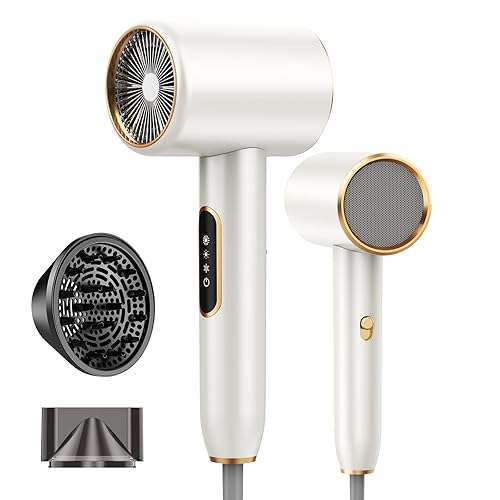
Professional Hair Dryer
A practical hair dryer (2400W, ionic) for quicker, kinder drying at home.
Hair dryers look similar but vary in the things that matter: power and motor type, hair-care technology, the heat and speed controls, attachments and weight. This guide walks through each so you can match one to your hair.
Wattage is the headline figure - around 1,800-2,200W suits most home use, with thick or long hair benefiting from 2,000W and up. But watts alone don't tell the whole story: the motor type matters too. DC motors are lighter and cheaper and fine for everyday use; AC motors (found in professional and premium dryers) are more powerful, push more air and last longer, which is why salons use them. A well-designed dryer with strong airflow can out-dry a higher-wattage one with a weaker motor.
Most modern dryers add some hair-care tech. Ionic drying emits negative ions that break up water droplets, drying hair faster while cutting frizz and static - great for thick or frizzy hair, though it can leave very fine hair flat. Ceramic and tourmaline elements give gentler, more even heat that's kinder to hair. Some premium dryers add intelligent heat control to avoid overheating. These features genuinely help with smoothness and damage, more than a few extra watts would.
Multiple heat and speed settings let you match the dryer to your hair and stage of styling, and a cool shot button fires cool air to 'set' your style and add shine - a small feature that makes a real difference. Attachments matter too: a concentrator narrows the airflow for smoothing and precision, while a diffuser spreads it to define curls. Finally, weight and balance affect comfort - if you dry your hair daily, a lighter dryer is genuinely nicer to use, which is part of what you pay for with premium models.
Budget and mid-range dryers (Remington, BaByliss) under about £50 dry hair well and have the features most people need. Premium dryers (Dyson, ghd, Shark) cost far more but dry faster, run quieter, weigh less and protect hair better - worth it if you dry your hair often or have lots of it. Match the spend to how much you use it: occasional users rarely need to go premium, daily stylists often appreciate it.
A practical hair dryer (2400W, ionic) for quicker, kinder drying at home.

A practical hair dryer (2000W) for quicker, kinder drying at home.
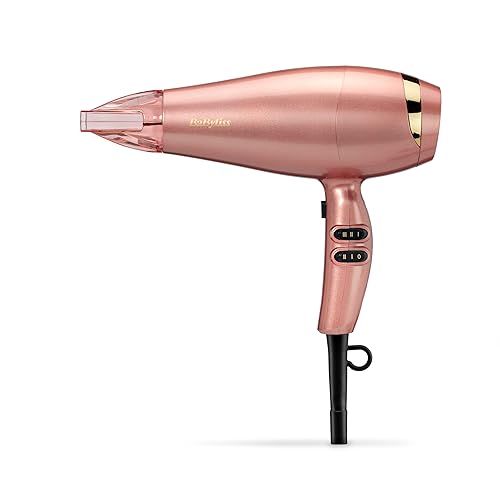
A practical hair dryer (2100W, ionic/ceramic) for quicker, kinder drying at home.

A practical hair dryer (2200W, ionic) for quicker, kinder drying at home.
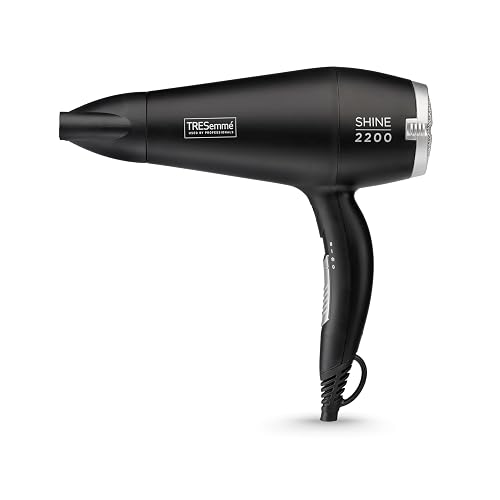
A practical hair dryer (2200W) for quicker, kinder drying at home.
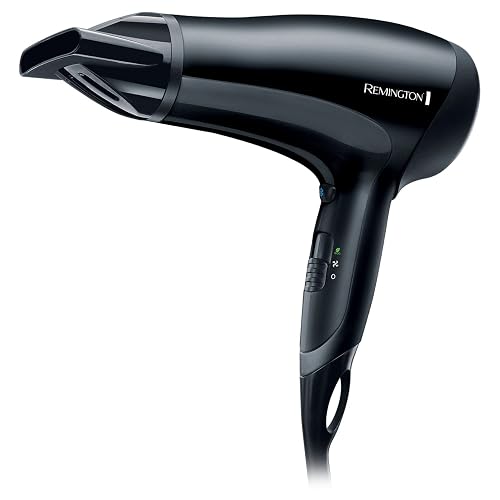
A practical hair dryer (2000W) for quicker, kinder drying at home.
Enough power with a good motor and airflow, plus ionic/ceramic care for your hair type. A cool shot and the right attachment (concentrator or diffuser) round it off. Don't fixate on wattage alone.
AC motors are more powerful and durable (used in professional and premium dryers); DC motors are lighter and cheaper and fine for everyday home use. Heavy or daily users benefit most from an AC motor.
Our top pick is the Professional Hair Dryer (our score 9.6/10) - A practical hair dryer (2400W, ionic) for quicker, kinder drying at home..